Free confidential consultation. Results in both state and federal courts.
Free Confidential Consultation
By Jason Ronis | Federal Criminal Defense Attorney | Jason Ronis Law, San Diego CA
⭐⭐⭐⭐⭐ 5-Star Rated on Google — Se Habla Español
TLDR: The blind mule defense argues that you did not know drugs or contraband were hidden in your vehicle at the San Diego border — and under federal law, the government must prove beyond a reasonable doubt that you DID know. Call Jason Ronis Law at (619) 859-2002 immediately — this defense must be built from the very first hours after arrest.
What Is the Blind Mule Defense?
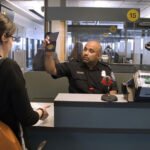
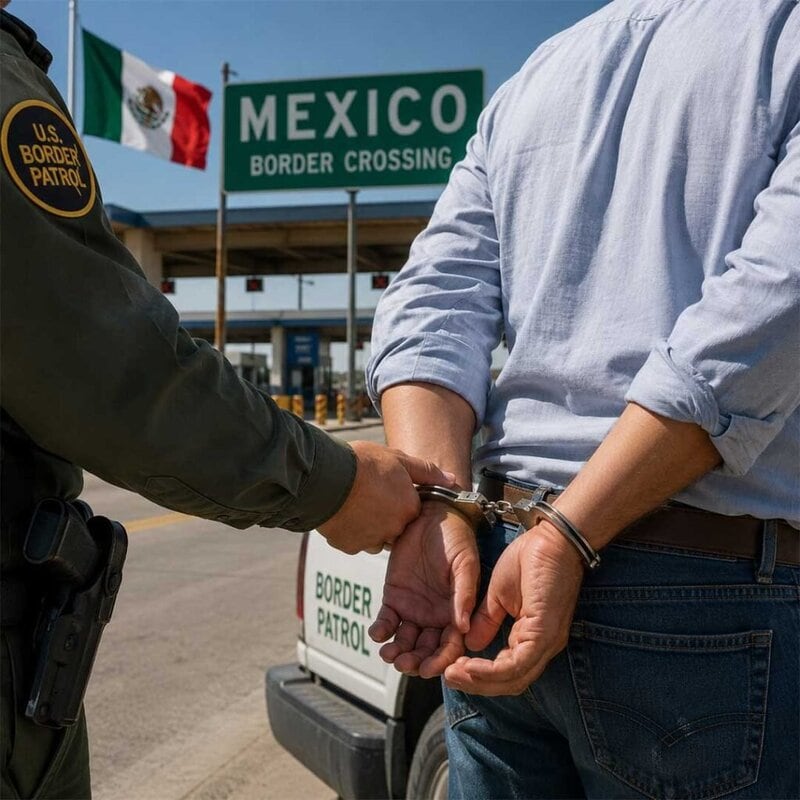
The “blind mule” defense applies when someone is arrested at the San Diego-Tijuana border with drugs, weapons, or other contraband hidden in their vehicle — contraband they genuinely did not know was there.
The name comes from the old practice of drug traffickers hiding narcotics in vehicles driven by people who had no idea they were transporting drugs. The driver — the “mule” — is blind to what is actually happening.
This is one of the most commonly charged situations at the San Ysidro and Otay Mesa border crossings. It is also one of the most legally defensible — because federal drug importation law requires the government to prove that you knew.
The Knowledge Element — The Heart of Every Blind Mule Defense
Federal drug importation under 21 USC § 952 and trafficking under 21 USC § 841 both require proof of knowing possession. The statute says you must “knowingly” import a controlled substance.
This means the prosecution must prove beyond a reasonable doubt that:
- You knew drugs were present in the vehicle
- You knew the specific substance was a controlled drug
- You had control over the drugs
If any one of these cannot be proven beyond a reasonable doubt — the criminal charge cannot stand.
A drug dog alert, a hidden compartment, or even large amounts of drugs do not automatically prove knowledge. Sophisticated concealment specifically supports the argument that you could not have known.
Evidence That Strongly Supports the Blind Mule Defense
Evidence in your favor:
- Sophisticated hidden compartment — A professional compartment in a car door, gas tank, or undercarriage that required specialized tools to install suggests someone else did this without your knowledge
- Borrowed or rented vehicle — You did not own the car and had limited access to it before the crossing
- No criminal history — First-time border crossers with clean records are statistically far less likely to knowingly traffic drugs
- Surprise and cooperation at arrest — Your immediate reaction of genuine shock supports lack of knowledge
- No financial motive — No evidence of large unexplained cash, no pattern of unusual income
- Limited opportunity to inspect — You crossed shortly after receiving the vehicle, with no time or mechanical knowledge to discover hidden compartments
- Third-party planted the drugs — Evidence someone else had access to the vehicle before the crossing
Evidence that weakens the defense:
- Prior drug-related crossings or convictions
- Text messages discussing drug transportation
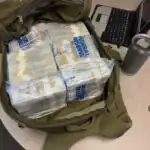
- Large amounts of cash found alongside the drugs
- You owned the vehicle and had it for extended time before crossing
- You knew specific people involved in drug trafficking
- Inconsistent statements made at the time of arrest
How the Government Tries to Disprove Knowledge
The prosecution will attempt to establish knowledge through:
Circumstantial evidence — They argue that the amount of drugs, the value, or the method of concealment is so obvious that any reasonable person would have discovered it.
“Deliberate ignorance” theory — Also called the ostrich instruction, prosecutors argue that you deliberately avoided learning about the drugs because you suspected something was wrong. Jason Ronis Law challenges the application of this theory aggressively — it requires proof of actual suspicion, not mere negligence.
Prior border history — Multiple crossings in the same vehicle, or patterns that suggest a trafficking relationship.
“Jason Ronis is truly one of the best attorneys — his expertise, sharp strategy, and attention to detail made all the difference.”
— Ethan C., ⭐⭐⭐⭐⭐ Google Review
🔴 Arrested at the San Diego border with drugs you say you didn’t know about?
👉 Call (619) 859-2002 — Free & Confidential
👉 Text Us Now — 24/7
No pressure. No fees. Real answers — English or Spanish.
What to Do Immediately After a Border Arrest to Protect the Blind Mule Defense
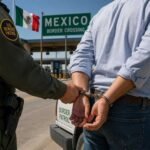
The first hours after arrest are the most critical for building the blind mule defense — and the most dangerous for destroying it.
DO:
- Say clearly: “I want a lawyer. I am invoking my right to remain silent.”
- In Spanish: “Quiero un abogado. Invoco mi derecho a guardar silencio.”
- Have a family member call Jason Ronis Law at (619) 859-2002 immediately
DO NOT:
- Explain how you got the vehicle — even a truthful explanation can be mischaracterized later
- Speculate about who might have put drugs in the car
- Agree to cooperate without your attorney present
- Sign anything without attorney review
Why this matters: The blind mule defense depends on consistency. Statements made at arrest — even innocent-sounding ones — can be used to undermine your credibility at trial. The defense is strongest when the first detailed account of what happened is given to your attorney, not to CBP agents.
How Jason Ronis Law Builds the Blind Mule Defense in Federal Court
Step 1 — Immediate evidence preservation
Jason Ronis Law requests access to the vehicle immediately after arrest. Photographs of hidden compartments, professional installation evidence, and forensic analysis can document that the concealment required specialized knowledge and tools.
Step 2 — Challenging the vehicle history
Who owned the vehicle? Who had access to it before the crossing? Who asked you to drive it across? All of these facts go to whether someone else planted the contraband.
Step 3 — Expert testimony
In appropriate cases, Jason Ronis Law works with expert witnesses who can testify to the professional quality of the hidden compartment — supporting the argument that it was not discoverable through ordinary inspection.
Step 4 — Attacking the government’s evidence of knowledge
Every piece of circumstantial evidence the prosecution uses to imply knowledge gets challenged — cell phone records, financial records, witness testimony, and prior border history.
Step 5 — Preparing for trial
Blind mule defenses frequently go to trial because the evidence is genuinely contested. Jason Ronis Law prepares every blind mule case for trial from day one — which consistently produces better plea outcomes as well.
For more on border arrest defense visit our Border Drug Smuggling Arrest Attorney San Diego, CBP Seizure Notice Form 6079 and CAFRA Deadlines Explained, and Detained or Arrested at the Tijuana Border Attorney pages.
Frequently Asked Questions — Blind Mule Defense San Diego
Q: What is the blind mule defense in San Diego federal court?
The blind mule defense in San Diego federal court argues that you did not know drugs or contraband were hidden in your vehicle when you crossed the US-Mexico border. Under 21 USC 952, the government must prove knowing importation beyond a reasonable doubt — meaning they must prove you knew about the drugs. If they cannot establish that knowledge element, the charge cannot stand. Jason Ronis Law builds blind mule defenses immediately after arrest. Call (619) 859-2002 for a free consultation.
Q: What evidence helps prove I didn’t know about the drugs in my car at the border?
Key evidence supporting the blind mule defense includes a professionally installed hidden compartment requiring specialized tools, borrowed or rented vehicles with limited time for inspection, no criminal history, genuine surprise at arrest, no large unexplained cash, and third-party access to the vehicle before crossing. Jason Ronis Law works to preserve and document all of this evidence from the moment of first call. Call (619) 859-2002.
Q: What is the deliberate ignorance doctrine in San Diego drug cases?
The deliberate ignorance doctrine — also called the ostrich instruction — allows prosecutors to argue that you had actual suspicion drugs were present but deliberately chose not to investigate. It requires more than mere negligence. Jason Ronis Law challenges the application of this doctrine aggressively when the government tries to use it to circumvent the knowledge requirement. Call (619) 859-2002 for a free consultation 24/7.
Q: Do I still have a blind mule defense if the drugs were found in a car I own?
Yes — you can still assert a blind mule defense even in a car you own. The question is whether you knew about the specific concealed drugs, not whether you owned the vehicle. However ownership does weaken the defense because it extends the window of time during which you had opportunity to discover the drugs. Jason Ronis Law evaluates ownership, access history, and vehicle use patterns in building the strongest available defense. Call (619) 859-2002 immediately.
📞 (619) 859-2002 | 💬 Text Us
📍 105 West F Street, Third Floor, San Diego, CA 92101 | 🌐 jasonronislaw.com
Free. Confidential. English and Spanish — 24/7.
Other Legal Guides and Helpful Information










We stand by your side in State and Federal courts, delivering proven results and round-the-clock emergency legal assistance.
Hours
Monday : Open 24 hrs
Tuesday : Open 24 hrs
Wednesday : Open 24 hrs
Thursday : Open 24 hrs
Friday : Open 24 hrs
Saturday : Open 24 hrs
Sunday : Open 24 hrs